How Casino Games Moved from Downloads to Browsers
Trace the history of online casino game access from installed downloads to browsers and apps, and see how each shift changed where play took place.
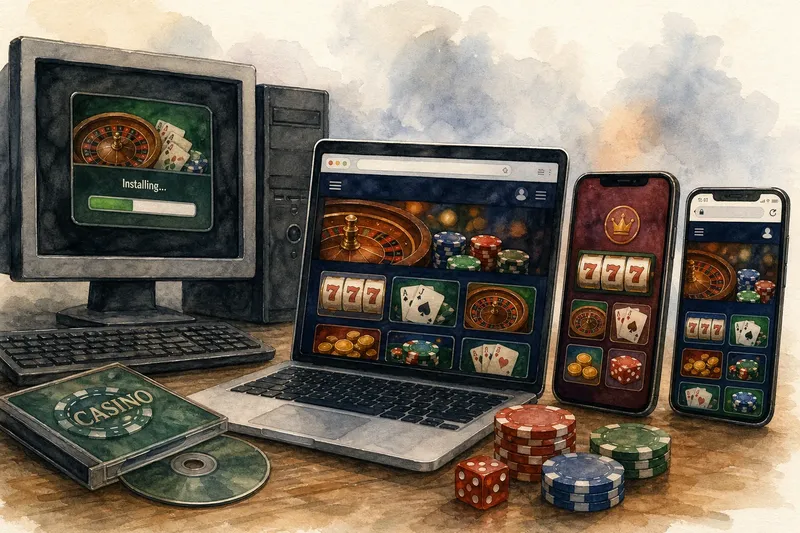
The common mistake in the history of online casino games is to treat browser play as a simple replacement for downloaded software. The change was more subtle: a downloaded game belonged to a programme on a computer, while browser play made a website the point of entry. That shift changed how people reached games and how platforms presented them.
Installed beginnings
Early online casino-style games could arrive as programmes that players downloaded and installed on desktop computers. The game software lived on the computer, though account access and other platform services could still need an internet connection. Players opened a dedicated programme and managed its installation and updates.
This arrangement tied access to a particular machine. Moving to another computer could mean downloading the programme again, while an update or compatibility issue could interrupt access. It was like keeping a board game in one cupboard: convenient in that room, but not ready to use elsewhere without carrying it along.
Browser access arrives
Browser-based casino play made the website the doorway. Instead of installing a full game client, a player visited a platform in a browser such as Chrome, Firefox or Safari and opened a title there. A dedicated programme was no longer required just to return to the platform.
The game still depended on technology: a working browser, device and internet connection. Some files might load temporarily while a title ran, but that differed from maintaining a separate, persistent application.
The website also gathered titles into a shared platform space. Players could move between available games from the same site rather than opening a separate programme for each one. The point of access had shifted from software installed on a machine to a service presented through a browser.
Apps and mobile web
Phones and tablets brought two distinct routes: an app installed through the device’s app system, or mobile web opened in a browser. Both put a platform on a portable screen, but they reflect different ideas about where software should live. The app makes the service an installed item; mobile web keeps the browser as the doorway.
That difference also shaped how platforms organised their presence. An app could appear alongside other installed software, while mobile web remained part of a browser session. The arrival of apps therefore did not simply end the browser era. It added another layer to a history in which access moved between a programme, a website and a mobile application.
What changed in access?
Why did browser games matter?
Browser play shifted the starting point from an installed client to a website. It made the platform, rather than a dedicated programme, the place where players encountered its catalogue.
Did browser play remove downloads?
No. Browser access and downloadable software coexisted, serving different platform arrangements. A browser could reduce the need for a persistent game client without making every title or service browser-based.
How did mobile apps change access?
Apps made the platform an installed part of a phone or tablet, while mobile web kept access within the browser. Their coexistence extended the story rather than replacing every earlier format.
What does “instant play” describe?
It usually describes the route into a title, not an absence of steps or technology. A player might still need to open a platform, sign in and wait for content to load.
Tracing a format shift
Imagine a player who first used a casino-style game through a desktop programme, then later visited the same platform in a browser. The starting point is a dedicated client installed on one computer. The player opens the platform’s website and selects a title there; the observable change is that the website now serves as the entry point, while the old programme may remain installed. If the platform later offers a mobile app, installing it adds a third route rather than proving that browser play has disappeared.
That sequence is useful because it separates a change in access from a change in the underlying game. A familiar title might be reached through different software arrangements, and each route tells a different story about the platform’s design.
Formats still overlap
Downloads did not vanish when browser access appeared, and mobile apps did not erase mobile web. Each format placed the platform in a different location: on a computer as installed software, on a website, or within a phone or tablet app. The history of online casino game access is less a straight march towards one replacement than a series of overlapping choices.
When a platform describes a title as instant, the useful historical question is where the game is actually presented: in a browser, in installed software or through an app. That distinction reveals how the platform has arranged access, without mistaking a new doorway for the disappearance of every older one.