Live Stream or Instant Play: Two Different Digital Formats
Compare live stream or instant play by the scene, round structure and source of each cue, so you can tell which format fits your preferred screen experience.
The common mistake with live stream or instant play is treating a familiar game title as a promise about the whole experience. That can leave you expecting a filmed table and meeting a software-built scene, or looking for a self-contained digital round while a dealer-led sequence unfolds.
The useful distinction is not simply what game is shown, but what gives its screen a sense of place and order. A live stream centres on a filmed table or studio; instant play builds its scene and transitions through software.
Two screen formats
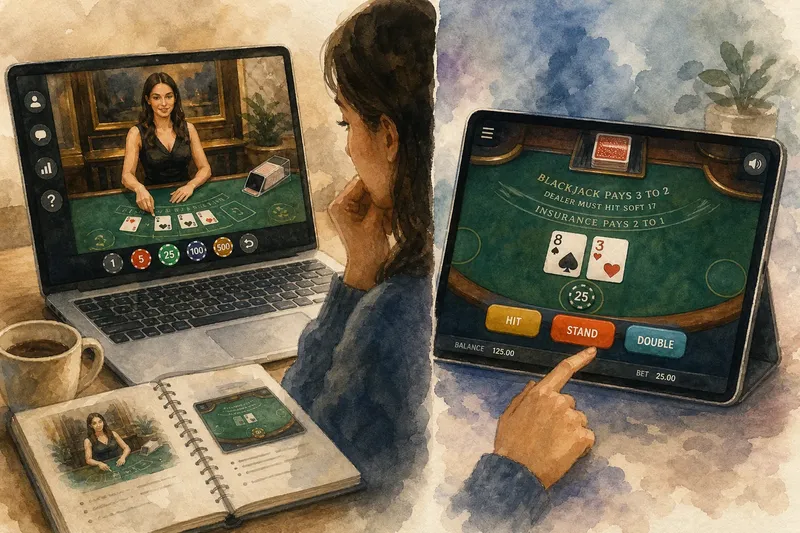
A live-streamed table pairs video from a studio or venue with digital controls. You might see a dealer, cards or a wheel, while the surrounding interface shows selections and game information.
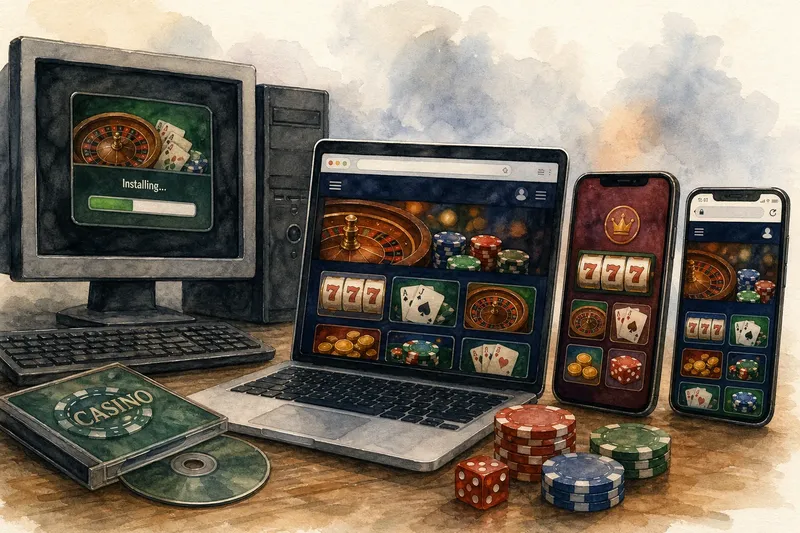
Instant play runs in a browser or app and presents its scene through software rather than live table footage. It might depict a recognisable card table, or use graphics that have no physical counterpart.
The difference is like a window beside a sketchbook: one shows a scene taking place, while the other constructs a scene on the page. Similar game actions can sit inside either format, but the screen gives them a different setting.
Scenes and atmosphere
In a stream, the camera supplies a visible setting and human presence. The dealer’s gestures, the table and the studio form the main image, with digital controls placed around or over it.
Software-led games create atmosphere through art direction, sound, motion and interface language. A digital table may look restrained, while another game may use theatrical graphics; neither style tells you by itself how a round is organised.
It helps to separate the source of the scene from its mood. A polished studio stream remains footage of a table, while vivid animation remains a software presentation, even if both borrow the visual language of a casino.
Different round structures
Live play is framed by a human-led sequence. The dealer’s actions provide visible cues, and your choices fit around the table’s current phase. The game information explains which choices are available and when.
Instant play is framed by software states: a prompt, a selection, an animation or a displayed result. The design determines how those transitions appear, whether they are direct or accompanied by a pause or flourish.
This distinction is about the source of the sequence, not a promise that one format is faster. A stream follows the visible activity at the table; software controls how its own round is presented.
What gives each format its character?
What makes a live stream different from a video?
A live casino stream combines a table or studio video with controls for taking part through the platform. The interface connects your selection to the game, while the footage shows the table’s activity.
Does instant play always mean a simple game?
No. Instant play describes a software-presented format, not the number of choices or the visual style. The particular game information and controls show what that version offers.
Can the same kind of game appear in both formats?
Yes, familiar game types can be presented as either a streamed table or a software-led scene. The title alone may not tell you which one you have opened.
How can I tell what a screen is asking me to do?
Check the displayed rules and the labels beside the controls before making a selection. If the screen does not make the action or its timing clear, pause rather than guessing.
A worked screen choice
Say you open a card game because its title sounds familiar, but the preview shows a dealer finishing a round. You wanted a software-led scene whose transitions appear on screen, so you check the format label and game information, then choose a clearly identified instant-play version instead. The resulting screen presents cards and prompts through software, matching the kind of sequence you were looking for; the trade-off is that you no longer see a filmed dealer handling the cards.
Choose by format
Use these observations to decide which presentation fits the experience you want. Each check points to a choice, with an alternative if the screen shows something different.
- Visible dealer: If the preview shows a dealer and you want a human-led scene, choose the streamed format; if not, consider a software-led game.
- Scene source: If the main image is filmed table footage and you want a physical setting, choose live stream; if the scene is drawn or animated and you prefer software presentation, choose instant play.
- Round cue: If the next phase is signalled by dealer or table activity and that sequence suits you, choose the stream; if prompts and screen transitions suit you better, choose instant play.
- Control meaning: If each control’s effect is clear in the displayed information, you can decide whether to proceed; if not, pause to read the rules or select another game.
- Social elements: If a presenter or chat feature is visible and appealing, check its description before choosing the stream; if it is absent or unwanted, choose a game without that feature.
- Visual focus: If decoration makes the game action hard to follow, choose a clearer presentation; if the action remains easy to see, that screen may suit you.
Read beyond the title
When comparing live stream or instant play, look at the source of the scene and the cue that carries each round forward. A stream places choices alongside filmed table activity; instant play places them within a sequence built by software.
A title or familiar set of rules cannot tell you everything about the screen. Check the format description, displayed rules and visible controls as separate clues. That gives you a clearer sense of what you will watch, what you can select and how the next part of the game will be presented.